Wednesday, March 28, 2012

dirty fingernails


NEW SCHEDULE!

Monday:

Morning- help tender cash in the canteen

Afternoon- Arts and Crafts (Simply Chocolate)


Tuesday:

Morning- Water Play OR Sand Play

Afternoon- Arts and Crafts (Simply Chocolate or afternoon activity)


Wednesday:

Morning- Messy Play

Afternoon- Arts and Crafts (Simply Chocolate)


Thursday:

Morning- Messy Play

Afternoon- Arts and Crafts (Simply Chocolate)


Friday:

Morning- help tender cash in the canteen.

Afternoon- Arts and Crafts (Simply Chocolate OR Vocational Staff meeting)


Seri Mengasih Centre has a (new-ish) pool! It’s small but about 3 times the size of a hot tub so it could easily seat 13 people and it’s at least 3 feet deep. On Tuesday mornings I am scheduled to help with the Water Play sessions. After all the classes have participated (however many weeks that takes) then we switch to Sand Play. This schedule is fairly new, new enough that I can’t tell you what Sand Play will look like. But in Water Play the students get in their water-fun clothes, sit in the pool, and have a water-related lesson from their teachers. The lessons I’ve seen so far involve animal habitats (in water or on land), sinking or floating, and small items and large items. These lessons are fun to watch. It’s obvious that some students are familiar with swimming, perhaps their parents take them to the local sports complex, while others are anxious and just plain overwhelmed. Either way, it must be difficult for students to focus on that lesson don’t you think? Having one hour a month devoted to an activity like this is probably good for a number of reasons, but I’ll have to research and look at the data for you first. My gut reaction is that learning in a new environment with new stimulus is rewarding but, if it were me, I would be too excited to sit and learn and repeat and everything these kids are asked to do. All in all, I’m sure the benefits outweigh the disadvantages. Sand Play will most likely be the same idea; new environment and new stimulus with a tactile advantage, I just haven’t seen it in action yet. For my psychology capstone class I researched Sand Play therapy used for children, mostly the nonverbal youngsters, and the process of that particular avenue for therapy. I told somebody about my knowledge of sand play therapy and how excited I was to see Seri Mengasih use sand… for whatever objective they are using it and so I’m thinking that must be why I have been placed in Sand Play. Although this Sand Play isn’t therapy, I’m hoping I can contribute a little bit of something or learn a lot of something from this new thing on my schedule.

As for Messy Play, that’s neat stuff. We make goop and ask kids to rub it on to their partner’s foot or we make colorful gunk and ask kids to finger paint with it. Just today I was massaging vegetable oil into homemade play-dough to get it the perfect balance of sticky, stretchy, doughy, malleable goodness. I never thought my job would be so gooey! But it really is fun. We try to make the kids a little uncomfortable, force them to touch something maybe they don’t want to put their fingers in and then do it in a safe environment. Over time this could help with obsessions over cleanliness or routine or steering clear of the “unknown.” These sessions are also turned into lessons about colors, shapes, size, etc but we are thinking of allowing the children some extra time for ‘free play’ meaning on the days we paint the kids will have time to do whatever they want with their paint and perhaps make ART! and release energy that way. I love that. I guess I love it because I’m such a psychologist and I love these opportunities for freedom of expression (perhaps from the subconscious?) and playing with little activities that can be seriously therapeutically rewarding for some individuals. Whoa, dream big.


The rest of my days and afternoons are spent decorating the Simply Chocolate boxes. It has become my responsibility and I have started to try and teach a few students how to write out the word ‘Sabah’ with the tiny rope, but it’s a slow process. I am committed and even somewhat obsessed with these boxes. I count the completed ones multiple times a day and double-check every single piece. Now that I am being utilized elsewhere, I worry about the boxes and I almost want to request a revision of my schedule so that I can work on the boxes more. I have a theory on my desire to stick with the Simply Chocolate boxes as much as humanly possible: when your schedule changes, or responsibilities change, or your job changes in any way, it becomes new and exciting and newness equals fasterness. The few weeks I have had doing water play and messy play have gone by quickly. Faster than the months I only worked on Simply Chocolate boxes. If my job changes and the days go faster then my return date is also quickly approaching, a thing I do not want to happen. I am clinging to these boxes and not thinking about the sentence that came right before this one.


In other news: my birthday is coming up! And then it’s Holy Week! I’m slightly worried about having my birthday on the other side of the world, but I had it in Egypt so… Plus, I haven’t had a birthday at home in Colorado for four years already, this’ll be the fifth year in a row so let’s hope homesickness can stay away. Holy Week plans are pretty easy-going, much like my Christmas plans were. It will be wonderful regardless of what I’m doing or who I’m with because, hey, I’m in MALAYSIA! Haha. Have a wonderful day wherever you are!! Peace.


Tuesday, March 20, 2012

Yea Yeah

There are a number of words in Malay that are the same in English because the country was originally controlled by Britain, or something. Today I want to write about the Malay word “Ya” which means Yes. In English we can say yes with a few variations: yes, yeah, ya, yup, sure… Most of the ways we say ‘yes’ (or affirmative) in Malay have “yes” (ya) in them, which, to me, sounds so formal because in Miss Congeniality: “tis ‘yes’, never ‘yeah.’” But in Malay it’s the same! Anyways, when someone asks me a yes or no question and my answer is affirmative, I always feel so informal when I respond with ‘ya’ because, to me, it sounds like ‘yeah.’ I’ve been looking for a way to be more polite. So one more time let me say, because that was confusing, “ya” sounds informal (by English “yeah” standards) when its meaning is actually the most formal you can be with a resounding “yes!” Suddenly, I’m confused about how to respond to some questions.

Luckily, the funny thing about Malaysia is that yes or no questions are hard to come by. Here is a list of USA “yes or no” questions but Malaysia “sudah [already] or belum lagi [not yet]” questions:

Are you married?

Are you hungry?

Have you showered?

Have you eaten?

And Malaysia “other” questions:

Do you know how to speak Malay?

Can we leave now?

Do you understand?

Do you want to go see a movie?

Are you okay?

Is this pretty?

Saying “already” or “not yet” in response to the first set of questions just saves you from funny looks. Responding with “no” is a bit rude and might even mean you never plan on being any of those things (married, hungry, showered, and fed) which should never be the case. Persons who don’t want to get married are rare and slightly looked down on.

I say “other” questions because I could (affirmatively) respond to the second set of questions with “know how” “can” “understand” “want” “okay” and “pretty” respectively. As grammatically awkward as it is to respond to any of the above questions in the manner I have expressed here, it is super duper common and expected. In fact, “boleh” [can] is basically another form of “yes” haha.

I can answer “right, Allisun?” with a “ya” [yes] or “tidak” [no], that’s the only surefire “yes or no” question I can think of. So in Malay we can say yes with: ya, ya la, ya bha, eya, boleh, boleh la, boleh bha kalau kau [can bha if you] (a very popular SABAH ONLY phrase), sudah, sudah la, sudah bha, and, the YAGM favorite, mm.

Once again, I realize this doesn’t really benefit you, it’s just been on my mind lately and I wanted to share it with you. I wonder if my English will ever be the same when I get back to the United States..? Say ‘yes’ today and radiate! Peace to you all, miss you.

Saturday, March 17, 2012

march newsletter

this was written February 26. i've copied and pasted the newsletter here for you to read in case you couldn't open your attachment of it :) the physical/pdf version is much much prettier...

Hello dear readers!

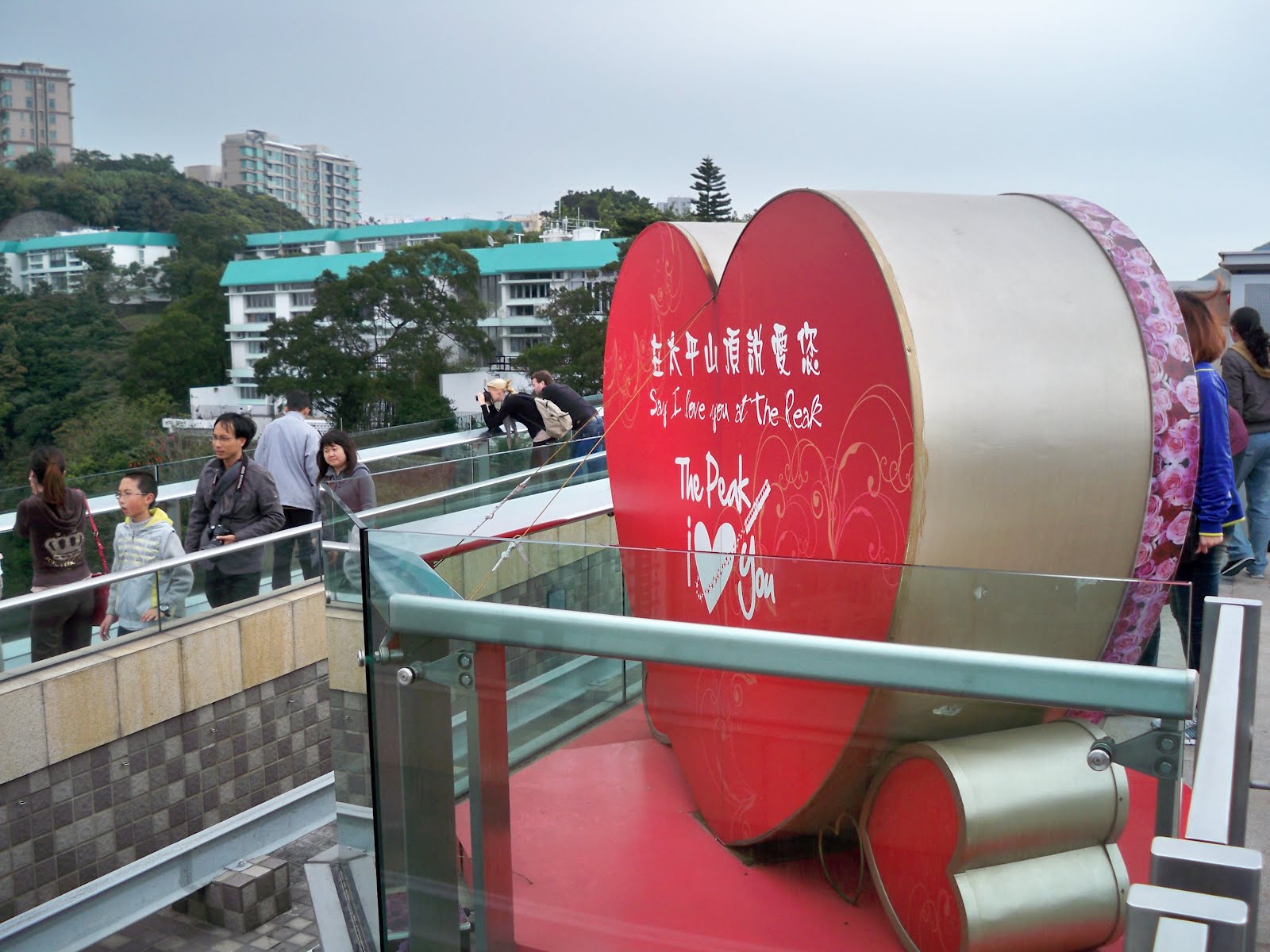
The past month has been a lot about rejuvenation. I spent a magnificent 9 days with my parents vacationing in Hong Kong and then 5 days at the Tao Fong Shan Christian Centre in Hong Kong. Visiting with my parents meant a lot of things, but it was most indicative of the midpoint in my year. The mentality now might become “it’s all downhill from here,” and that might be true, but I won’t have any expectations either way. Although it is halfway “over” (it’ll continue within me from now until forever), I’m choosing to stay in denial about my year here ever having an ending. The purpose of this denial is to keep me focused on the experiences right in front of my face and not the future. I have had people ask what I’m going to do when I get home and I honestly haven’t thought about it/when I do think about it I want to vomit so I’d rather not think about it. For these next few months, I am going to treasure and hold and keep every moment (aside from those that I post in blogs or email to you) but I promise I will share them all when I do get home. That I know for sure.

Tao Fong Shan is a beautiful place on top of a hill in Hong Kong. Hong Kong is a densely populated place, especially compared to Kota Kinabalu. The crowds and smog were overwhelming at times. Tao Fong Shan was (at least somewhat) removed from all that noise and so it gave me an opportunity to quiet myself and then listen. My days alone there (after my parents left) were quiet but self-indulgent. I just took care of myself through reading, napping, journaling, listening. I can listen and reflect in Kota Kinabalu too, the beach is lovely for such practices, but being in a place where the purpose is to quiet the distractions was different and hugely appreciated. I took some time to walk the labyrinth there, which is always an ineffably powerful experience for me. I ate my meals alone but in a room full of people (all speaking a different language) but even that was humbling and appreciated. It was time just for me that I didn’t even know I needed.

After those two days the rest of the YAGM Malaysia Crew joined me at Tao Fong Shan so we could all have some relaxation, meditation, training, and a renewed Malaysia visa. One of my favorite moments of our time together was when we walked the labyrinth together (but separate and at our own pace). It was a rainy few days and so the ground was a bit muddy and the clouds were thick and low. We walked anyway, in silence and with our heads bowed. The low clouds became misty sprinkles, and then drizzles, and then drip drops, and then raindrops, and then bigger raindrops until our shoulders and heads were soaked and our tears were hidden. Many of us walked barefoot and felt every pebble and puddle. Afterwards, Peter Harrits the country coordinator helped us to close the worship and said something along the lines of, “we have traveled through dirt and mud and through the baptismal waters to the heart of God. Now we travel to the heart of the world with God’s good news.” This was such a beautiful prayer for me. The symbol for Tao Fong Shan is a cross on top of a blooming lotus flower. The lotus flower carries a lot of meaning for Chinese religious culture and was adapted by the Christian Norwegians who came to Hong Kong and helped to establish the Christian centre. The lotus flower grows out of its struggle in mucky ponds so the Christians here equated this to our struggle through sin and muck and then upwards, cleansed through baptismal waters, there is new life in Christ, blossoming as a lotus flower. It’s beautiful imagery, and it is something I can relate to.

I am constantly walking through grime and sin but I am made clean again daily so that Christ’s beauty can shine through me.

This Lent I have decided to walk with Jesus through the wilderness and fast every Friday through Good Friday. People in Sabah are not surprised or unfamiliar with fasting and therefore they support me in a way I’ve never witnessed. The Muslim month of fasting and feasting is common in this country and consists of eating and drinking (I learned that water isn’t even taken during a fast) after the after-sunset prayers. My fast will also end after sundown and after prayer. It will be an opportunity to learn about another religion and grow personally. Fasting isn’t necessary to walk through the wilderness or to experience Lent but I can honestly say that it has already impacted my spiritual routine in that my moments of hunger have been moments of prayer, an undeniably good thing. Furthermore, I have made this my own personal fast complete with its own limitations and consequences. My fast isn’t a church-wide or a region-wide practice, but I hope that it is still impacting and eye opening for discovering who I am. It’ll be personally rejuvenating, but in a different way. Pray for me, thanks!

I am mindful of you all this Lent. And thank you for everything.

peace

Friday, March 9, 2012

the same deep water as you


Hong Kong was awhile back. I wrote about it in my newsletter and posted the photos on facebook. The lotus cross symbol from the Tao Fong Shan Center in Hong Kong really stuck with me. I think it's beautiful! When Peter was here he went wandering around the beach at school and found a huge lotus pond. It's strange that I had never noticed it before because the vocational side does morning walks right next to the pond. A few weeks later I went to look at it and it was the most beautiful thing I had ever seen. Big blossoms and a lot of green. Now, more recently, I saw it and it is rundown and murky as ever. There's not a single pink flower in it and most of the water is soaked up by sand. Either way, I trust that one day beautiful flowers will grow again from that muck.

I also have seasons of muck and sin. Times of great confusion or sadness. And times of new life and blossoming. I am not always perfect, well I guess I'm never perfect. I am simultaneously saint and sinner. The opportunity to talk about theology doesn't come up very often and that is mostly because I'm afraid to share my thoughts with someone who doesn't have the same thoughts. I am a coward. Lately I have heard and read about various religions and the claim that there is one way to heaven (their own religion), all other ways send a person to hell. I just like to live in my flowery philosophy where the afterlife is paradise and beautiful and open for all people to be together in peace. I mean, heaven'll be fantastic. Life on earth is earthly and filled with human corruption but that's not all there is to life. Living here and now is comparable to paradise, right? It's not all murky and mucky. We all have daily moments of laughter, joy, flawless beauty, and peace. Little moments like these make living and serving in Malaysia totally worth it. Glimpses of what God intended us to have on earth and to be truly present here and amongst the people of the world. Right?


Tuesday, February 14, 2012

Thursday, February 9, 2012

i love to laugh

HAPPY VALENTINE’S WEEK!

Anyone who knows me knows that I’m the weirdest gal around because I thoroughly enjoy Valentine’s Day. So much so that I recognize the month of February as a month for giving love and this week especially. Valentine’s Week is lovely for me so far :)

I want to describe the kids/students/trainees I work with. This a little difficult because I fear misunderstandings or misrepresentations might happen. I’m not sure how much I can or can’t say, or even if I ‘can’ (legally) post photos of these students. The basic thing you must fully grasp before reading on is that I LOVE all of them. I’ve never worked with individuals living with disabilities in my entire life. That’s not necessarily a bad thing. I have studied (only surface level) various mental disabilities or disorders and some sociology related things when it comes to disability. For my situation now, I’ve been learning through observing and repeating what I see from the employees here at SMC. After all, they’ve been working here and with these individuals for longer than I have, and they know what works. What I remember from CLU education is the psychology stuff, how to train or un-train behaviors, potential reasons for behaviors, etc. That stuff is still useful now but suddenly, in this context, it just seems unnecessary. We’re beyond the point of ‘training’ because the students I’m referring to (will for the duration of this post) from Arts and Crafts are older, independent, and full of personality. They are each so unique, but that’s not my point. ‘Training’ an individual to say “I want to eat” when they are hungry seems like common sense. Rewards and punishments are used to ‘train’ something into an individual and rewards always work better (have a longer-lasting effect) than punishments. Maybe I just think this is ‘common sense’ because I studied it for four years and love it… a lot… Regardless, we (staff) don’t spend much time ‘conditioning’ the students in Arts and Crafts.

I walk across the street to Arts and Crafts and am immediately greeted by my ‘boss’ (and friend!) there and a few of the vocational trainees. This morning greeting is dual-language and filled with happiness for a new day! The students line up and get ready to go ‘walking,’ their daily exercise. Camp counselor skills come in handy here, the staff keep the trainees in a ‘basic’ line-shape while walking, try to keep everyone at the same pace, keep everyone safe from cars and crocodiles. The first time I went walking with the vocational trainees I noticed a beautiful thing; the buddy system. It’s beautiful because two people are helping each other, potentially one is helping more than the other but society looks at them both and says “DISABLED” even though they are able! Able to help and walk and smile and just enjoy life. After walking is ‘morning talk’ where vocation kiddos split back up into their respective locations and I stick with those from Arts and Crafts to listen to what they have to say. The trainees take turns standing up and say, “good morning friends!” and then what they plan on doing for work that day. Of course, it takes more than 20 minutes to get to know all the personalities but if an observer observes this 20 minutes very carefully, they can learn a lot! The personalities shine! Shyness, leadership, ability, energy, all of it, shows right here in the morning talk.

We break and get to work. My ‘boss’ has put me in charge of a monthly order for chocolate box lids that we make/decorate. It’s a pretty detailed process but the final product doesn’t seem that big of a deal. The lids are decorated with a card with one of two traditional “Sabahan” costumes; Kadazan or Sumazau. The card itself is made from recycled paper the trainees make… just water and recycled paper with the occasional dried leaves. I sit and quietly make the box lids on my own, pasting the traditional costumes in their specific places and writing out the word “Sabah” using string made from the bark of a tree (did I mention it’s pretty detailed?). Trainees around me do various other jobs. The less-dextrous turn recycled pieces of paper into smaller pieces of paper so that they can eventually become a new and pretty piece of paper! Others are busy making paper, some help to clean the bathrooms, some help to create and/or cut out parts for the box lids, and one sometimes stands around with the broom :) All various levels of ability, but everyone is work.ing My job is these box lids but I also make sure that trainees are working by asking them to work! Sometimes (but oh so rarely) our jobs get boring or the heat gets the best of us and we are all at least a little bit bored. In these rare moments, I really don’t care how many box lids are unfinished for the upcoming month, I want to laugh with someone or hear someone laugh. Their personalities, gosh, they’re making me smile even now as I write. When one trainee laughs, usually everyone smiles, even if the laugh is a little… maniacal, or is a response to the individuals own daydreaming.

I’ve written that I’m not opposed to being the clown. We listen to a radio station at work, apparently it’s ‘retro’ music but I don’t know because the songs are Malaysian songs. Except for, about every fifth or so song is in English (from the US or the UK) and range from year 1950-2000, but I suppose you could call them retro :) I sing those songs and I dance to those songs, I seranade trainees with some of these songs and it makes us smile together.

Some of the trainees have mannerisms, you know, things they repeatedly do or say. It’s hard for me to remember a time where I wasn’t used to these mannerisms and I think that’s because no one has so much as flinched at them since I got here. There’s really no point in asking what’s wrong or what each behavior means but they’re not ignored. This is the biggest, most controversial, stressing-me-out-to-write-it topic. We make fun of the trainees and/or their behaviors sometimes. Imitations are not uncommon, neither are conversations in grunts, or questions that we already know the answer to, or unnecessary requests. Things are different in Malaysia, that’s something I’ve known since I got off the plane here. When I say “different,” I am intentionally not making a judgment about who does it right or wrong or better or worse, it’s just different. For instance, questions about how much money my father makes are not too personal, even if I just met the asker. Likewise, “mocking” trainees and students at work is not seen as hurtful. My first reaction is sometimes, “this isn’t right” but then I look at the trainee and see that they not distraught by this attention. In fact, it can be fun! I’m so worried that you, the reader, are going to think that Malaysians are rude and heartless. Please don’t think that! Let me give an example: there’s a girl that doesn’t have a very extensive vocabulary, and her family speaks Chinese at home so her malay is even less. Staff will ask her questions that we know she knows the answer to, mostly because she is the cutest darned thing. We’ll ask her father’s name and she’ll answer, and when she does she sounds so smart and sure of herself and saying her father’s name makes her smile and clap her hands! I see the love she has for her dad everyday and it is enough to keep me asking her father’s name every chance I get! Conversations with these students almost always result in smiles, even if there’s no meat in the conversation. We might laugh at someone’s water bottle or slow gait or how they straight up didn’t listen to a staff’s instructions. We smile, we laugh, and there are no hard feelings. Having these surface level and mindless conversations with the trainees is still beneficial. A lot of times, talking to a student makes sure that they’re awake and listening, it tests their social skills, their responsiveness, and helps them to practice language. Like I’ve been saying, nothing is all good or all bad, it’s just different.

I haven’t witnessed very many “incidents” here (tantrums, fits, etc.) but even when someone is crying the reaction from the staff is different from what I would typically expect given my ‘western’ education on this stuff. But, like I said, the staff have been doing this much longer than I have, they know what works and what doesn’t work. It’s also important to note that I am not confident enough to actually react to incidents; I don’t discipline, comfort or even threaten. I don’t think it will ever be my place to discipline or threaten these trainees but when I hear the tactics teachers/staff use to get trainees to calm down or do their work, I think to myself, “how would that be viewed in the United States?” And so I worry about what you’ll think of all of this, obviously. I really love the students though so if you have more questions or want to hear a story about these cuties or what keeps me laughing when I’m with them, just email me.

Thank you for reading this with an open heart and mind so that some judgment can be repressed and you can see, if nothing else, that I am learning so much. And I’m loving so much more.

Share some love :)


Thursday, January 26, 2012

red and orange

HAPPY CHINESE NEW YEAR!

I just sat down to write this and a series of firecrackers is going off at the house next door. Very. Continuous. Cracking. and Popping. That's pretty cool though. This was my first time celebrating Chinese New Year and it has been so much fun that I am trying to understand why it was the first time!!! I mean, besides the obvious (I'm not chinese). It was basically nonexistent in my pre-Asia life. January 23, 2012.. year of the Dragon! I spent my weekend and Chinese New Year holiday going to open houses, learning customs, relaxing, and meeting all the members of one family. Because I stayed with a Chinese family, I gained some stories and traditions that are almost too numerous to explain here, but I will try, if I can remember.

First of all, we went to these "open houses" but not just any old open house. Residences decide which day and which meal of the 14 days of the Chinese New Year to host their open house. The first dinner is almost always at the eldest brother's house. Families typically follow the father/husband's lineage to determine where to go for the big dinners. For instance, we didn't see a recently married sister because she was at her husband's family's house. I was only 'really' involved in the first two days of the new year but we went to at least 5 houses (one of them twice, and one was the place I stayed for the duration). Breakfast was porridge on both days, something light to save room for a big lunch and/or dinner. Lunches was more likely a stop in, greet the host, find some food, meet everybody, pass out angpow, and head home. Dinners were less like an open house because they had more of a 'start' time rather than a window of coming and going as one pleases.

here are some other various traditions I witnessed :)

1. receiving/giving oranges. so many oranges. different sizes, amounts, types and for many days!
2. receiving angpow. These are the red envelopes with cash in them. Married women (more typically women...) hand these out to every unmarried young person when they come to a house or when unmarried young people come to their house. These envelopes are beautiful and you can find them anywhere, but mostly banks give them out this time of year. They are (nearly) all different. I'm told it's rude not to accept the angpow. I observed really hard to figure out how to receive angpow. Modest smile, kind words (ie: "happy new year! thank you!"), don't open it, and keep it with you until you can put it in a safe place. I went to a lot of houses and met a lot of married women so you can figure I did well on the angpow front too ;)
3. bathing in pomelo leaf water. My host-mom, Kerry, boiled pomelo leaves in water and saved the water for us to bathe with. The smell was terrific. This was to be done on New Year's eve to wash off the old!
4. wearing new clothes! everyone I met was wearing their newest clothes because, well, that's tradition. For 14 days, everything worn was supposedly new! This was fun to see because it was like shopping by staring at these gorgeous models and their new stuff they were rockin'. Start off the new year with new clothes, hmm.
5. leaving a light on for the god of good fortune to stop by. If a light is still on, then the god will know you're home and will shower you with good stuff!
6. this special cake we ate in the morning had a funny story. It was very gelatinous and sticky cake that was (but isn't always) fried with egg. I wouldn't describe it as cake, although that's what others called it, but more like sticky and thick jell-o that didn't have flavor. It may have just two ingredients; gelatin and brown sugar. But this stuff, this stuff was to make it so that we (people on earth) can't send messages to the gods about each other's behavior over the past year. The messages can't be sent if our teeth are practically glued together! hehee.
7. lion dances! I saw many lion dances and heard only a little bit of the story on that tradition. the myth is that lionlike beasts would terrorize the villages (many years ago) and so they left out fruit, banged on drums, and lit firecrackers off to scare them away. The beasts would eat them (I guess) if they successfully entered the village and houses. So these lion dances! they are awesome! two people usually inside the lion costume doing acrobatic and cute things, all to the beat! We had a performance here at school and it was rather frightening for some of the children, reasonably so. These lions are supposed to represent the mythological characters, so they jump at people, snap at them, try to scare them on purpose! It's entertaining nonetheless.
8. shower one another with blessings and good tidings and love and hospitality. Start the year off with happiness and smiles shared with each other. kindness and gratitude, etc.

I am so glad I could experience this holiday and in this way and in this beautiful place. The "chinese" traditions and people I surrounded myself with opened my eyes to the "other" side of Malaysian culture. Look at me, getting all cultured and stuff :) Thanks for your prayers!!

Lion dance! Very popular!

prettyyyyyyyyyyyyy!